
How much resin for trays
A resin tray is surface times a thin layer: lots of area and little depth. The usual mistake is running short so it does not cover fully. Here are the grams by size, which resin gives the best base and how to avoid bubbles on a wide layer.
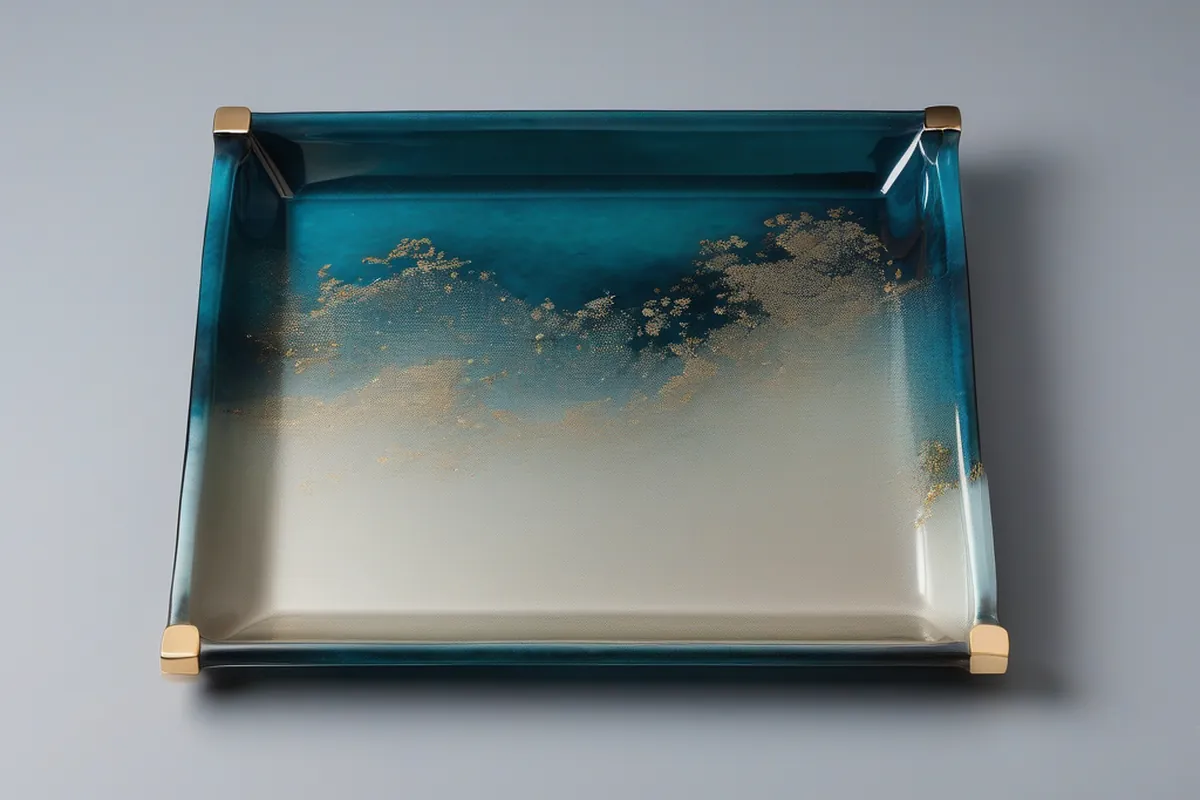
Resin per tray
| Tray | 1 pc | 2 pcs |
|---|---|---|
| 25×15 cm · 0.3 cm | 139 g | 278 g |
| 30×20 cm · 0.3 cm | 222 g | 444 g |
| 40×30 cm · 0.4 cm | 591 g | 1182 g |
How to calculate resin for a tray
Base area × layer thickness. For a rectangular base, length × width in cm; multiply by the thickness (0.3-0.5 cm is typical) and by density (~1.12 g/ml), plus 10 %. If the tray has high walls and you want to fill them, count that volume separately.
Which resin to use
A self-levelling crystal coating resin like Artline Crystal: it covers large surfaces with a smooth, glossy base. Pour in the centre and let it spread on its own; help with a spatula only in the corners. Work fast if the resin has a short pot life.
Bubbles on large surfaces
The more area, the more trapped air. Pour a thin layer, pass the torch in quick sweeps and repeat a few minutes later as the last bubbles rise. A room at 22-25 °C and a low-viscosity resin make it easy.
Example: rectangular tray
- Base
- 30 × 20 cm
- Layer
- 0.3 cm
- Volume
- ≈ 180 cm³
- Units
- 1
- Mix (+10 %)
- ≈ 218 g
Note: Doubling the thickness to 0.6 cm doubles the resin: on large trays, every millimetre counts.
Want the exact amount for your piece, with the A:B ratio and layer plan?
Calculate my tray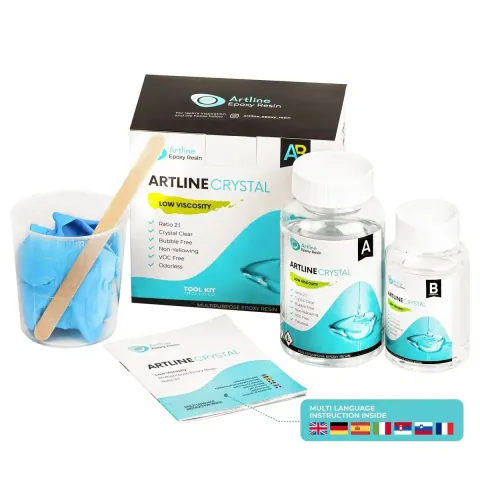
Frequently asked questions
How much resin do I need for a tray?
A 30 × 20 cm tray with a 0.3 cm layer takes about 218 g. The total scales with the surface and the layer thickness.
Which resin is best for trays?
A self-levelling crystal coating resin: it covers wide surfaces with a smooth base. Pour in the centre and let it spread.
How do I stop the resin running off the edges?
If the tray has no rim, seal the perimeter with tape or a silicone bead; if it has walls, calculate the volume up to the height you want to fill.