
How much resin for keychains
Keychains are ideal for batch-making and using up leftover resin, because each one takes very little. Here are the grams by size and batch, which resin works best in small molds and how to mix minimal amounts accurately.
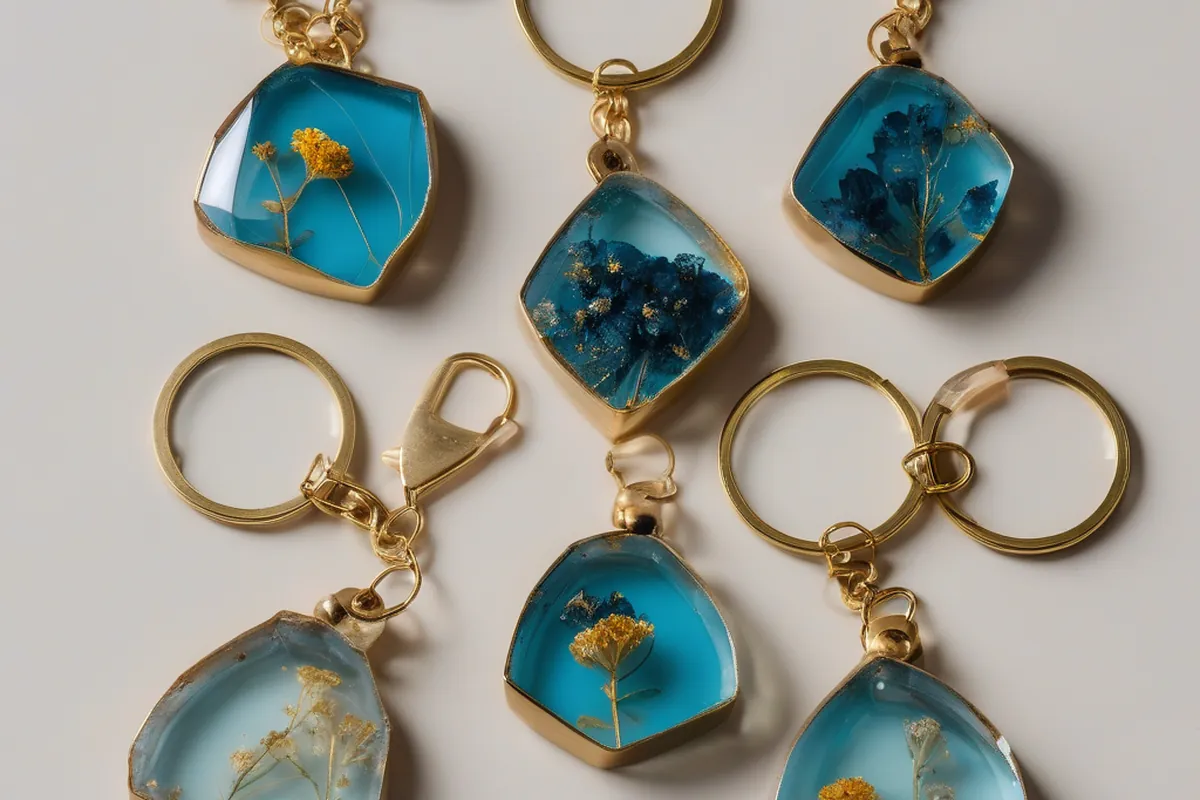
Resin per keychain and per batch
| Keychain | 1 pc | 10 pcs | 20 pcs |
|---|---|---|---|
| 4×3 cm · 0.4 cm | 6 g | 60 g | 120 g |
| 5×4 cm · 0.5 cm | 12 g | 120 g | 240 g |
| Round Ø4 cm · 0.4 cm | 6 g | 60 g | 120 g |
How to calculate resin for keychains
Each keychain is a tiny volume: length × width × thickness in cm, or the mold capacity in ml. Multiply by density (~1.12 g/ml) and by the number of pieces in the batch. As the amounts are so small, round slightly up so you do not run short mid-pour.
Which resin to use
A fast-curing crystal coating resin like Artline Crystal: clear, low-viscosity and made for small silicone molds. If you add dried flowers, glitter or photos, do it in two thin pours to set them at mid-height without floating.
Make the most of tiny mixes
At 6-12 g per piece, any leftover from another project makes several keychains. Weigh with a 0.1 g scale, mix in a small cup and have the molds ready: a coating pot life is short and rushing does not help.
Example: batch of 20 keychains
- Piece
- 5 × 4 cm
- Thickness
- 0.5 cm
- Resin/piece
- ≈ 12 g
- Pieces
- 20
- Total (+10 %)
- ≈ 240 g
Note: At this size, 240 g make 20 keychains: one of the highest-yield projects per gram.
Want the exact amount for your piece, with the A:B ratio and layer plan?
Calculate my keychains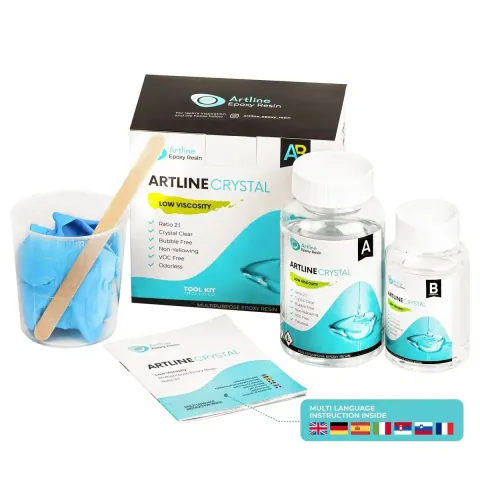
Frequently asked questions
How much resin do I need for one keychain?
Very little: a 5 × 4 cm keychain at 0.5 cm thick takes about 12 g of mix. A batch of 20 is around 240 g.
Which resin is best for keychains?
A fast-curing crystal coating resin: clear and low-viscosity, ideal for small molds. Deep-pour resins are unnecessary at these thicknesses.
How do I set flowers or glitter inside?
Pour a first thin layer, place the element when it gels slightly and cover with a second layer. That sets it at mid-height without floating or sinking.